Ever noticed how your muscles sometimes feel stiff even when you haven’t done anything particularly strenuous? Maybe your shoulders tighten after hours at a desk, your calves feel restricted during exercise, or your lower back becomes uncomfortable after a long day.
These everyday problems can make movement frustrating, especially when stretching and rest don’t seem to provide lasting relief.
That’s where soft tissue mobilization enters the picture.
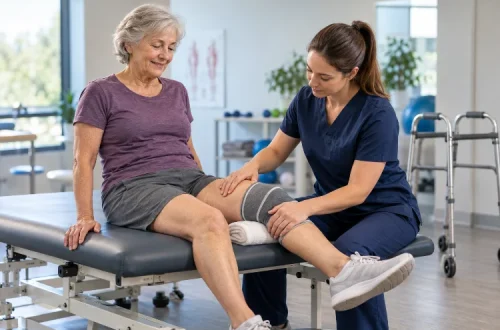
Used by physiotherapists, massage therapists, and other trained rehabilitation professionals, this hands-on approach focuses on improving comfort, supporting movement, and helping people manage musculoskeletal symptoms.
However, effective treatment involves more than applying pressure to tight muscles or attempting to break down supposedly stubborn tissue.
Soft tissue mobilization strategies for functional muscle care combine clinical assessment, carefully selected manual techniques, patient feedback, and active rehabilitation.
Modern research suggests that certain approaches may improve short-term pain and range of motion, although results differ across techniques and health conditions.
Understanding how these methods work – and where their limitations lie – can help patients and clinicians make smarter decisions about muscle care, physical recovery, and long-term functional health.
1. Understanding Soft Tissue Mobilization and Functional Muscle Care
Soft tissue mobilization refers to therapeutic techniques that apply controlled manual or mechanical forces to muscles, fascia, tendons, and surrounding soft tissues.
Clinicians use these techniques to address discomfort, perceived stiffness, and movement limitations associated with musculoskeletal conditions.
Unlike general relaxation massage, clinical mobilization is usually connected to a specific assessment and functional goal.
The Relationship Between Soft Tissues and Movement
Muscles, tendons, and connective tissues contribute to movement, joint stability, and force transmission.
When someone experiences pain or reduced mobility, these structures may be involved alongside the nervous system and other factors.
For example, a person with limited shoulder movement may notice tenderness around the upper back or chest.
However, tenderness alone doesn’t prove that a particular muscle is damaged, shortened, or mechanically stuck.
Modern musculoskeletal care recognizes that movement restrictions can result from several interacting influences, including physical capacity, pain sensitivity, previous injuries, and activity habits.
Functional Improvement Versus Temporary Relaxation
Relaxation is a valuable outcome, but functional muscle care goes further.
Its purpose is to help people perform meaningful activities with greater comfort and confidence.
A runner might want to improve ankle mobility, while an office worker may hope to turn their neck comfortably during daily activities.
In these situations, treatment success should be evaluated through practical improvements rather than simply how loose the muscles feel immediately afterward.
The 2021 clinical practice guidelines published in the Journal of Orthopaedic & Sports Physical Therapy support considering soft tissue mobilization or massage alongside other treatments for short-term improvements in chronic low back pain.
This reinforces an important principle: manual therapy works best as part of a broader rehabilitation strategy.
2. How Soft Tissue Mobilization May Influence Muscle Function
Soft tissue techniques are often explained using terms such as releasing adhesions, breaking scar tissue, or restoring fascial alignment.
Although these descriptions are common, the actual physiological mechanisms are considerably more complex.
Researchers continue to investigate how mechanical stimulation, sensory input, and patient expectations contribute to treatment outcomes.
Sensory Stimulation and Pain Modulation
During treatment, pressure and movement stimulate receptors in the skin and underlying tissues.
These signals interact with the nervous system and may temporarily influence how discomfort is experienced.
For some individuals, the result is reduced pain sensitivity or greater confidence when moving a previously uncomfortable area.
However, this doesn’t necessarily mean the therapist has physically corrected a damaged structure.
Changes in pain perception can occur without permanent alterations to tissue anatomy.
Changes in Movement Tolerance
One commonly reported benefit is improved range of motion.
A person might find it easier to bend forward, rotate their neck, or extend their shoulder following treatment.
These improvements may involve changes in stretch tolerance, perceived stiffness, or muscle activity rather than measurable tissue lengthening.
Importantly, immediate increases in mobility don’t automatically translate into lasting recovery.
Long-term improvements generally require attention to strength, movement practice, and the factors contributing to the original limitation.
Why Mechanical Explanations Need Caution
Fascia is strong connective tissue, and its behavior cannot be fully explained by the idea that ordinary manual pressure simply melts or breaks it apart.
Although soft tissues respond to mechanical forces, clinical research hasn’t established that common mobilization techniques permanently reorganize fascia in the ways sometimes advertised.
Therapists should therefore focus on observable outcomes instead of making unsupported structural claims.
Feeling better and moving more comfortably are meaningful achievements even when the exact biological mechanism remains uncertain.
3. Essential Hands-On Soft Tissue Mobilization Techniques
Several manual techniques can be incorporated into rehabilitation programs.
Each method creates a somewhat different sensory and mechanical experience, but no single technique is universally superior.
Selection should depend on the patient’s symptoms, preferences, tolerance, and functional goals.
Myofascial Release Techniques
Myofascial release generally involves sustained or gradually applied pressure across soft tissues.
Therapists may use broad hand contact, slow movements, or controlled stretching to address areas associated with discomfort.
A 2021 systematic review and meta-analysis examined eight randomized controlled trials involving 375 people with chronic low back pain.
Researchers found improvements in pain and physical function, although evidence was limited by the small number and quality of available studies.
The review didn’t demonstrate significant improvements across every measured outcome, including quality of life and trunk mobility.
Consequently, myofascial release should be viewed as a potentially useful treatment option rather than a guaranteed solution.
Longitudinal Soft Tissue Mobilization
Longitudinal techniques involve applying controlled pressure along the general direction of muscle fibers.
A therapist may use slow strokes around the calf, thigh, or upper back while monitoring the patient’s comfort.
These methods can be incorporated into treatment when someone experiences localized muscular discomfort.
However, there is limited evidence that following a particular fiber direction produces consistently better clinical outcomes than other appropriate techniques.
The practical objective is comfortable symptom management and improved movement tolerance.
Cross-Fiber Techniques
Cross-fiber mobilization applies pressure or small movements across the orientation of a targeted structure.
Historically, therapists have used these techniques around tendons and areas of localized discomfort.
Some treatment traditions suggest that cross-fiber friction improves tissue organization or breaks down adhesions.
Such structural effects haven’t been convincingly established for routine clinical practice.
Cross-fiber techniques should therefore be used selectively and cautiously, particularly around irritated tendons or sensitive tissues.
Trigger Point-Oriented Treatment
Trigger point techniques focus on tender areas within muscles that reproduce familiar symptoms.
A therapist might apply controlled pressure near the upper trapezius when treating someone with neck-related discomfort.
Pressure should remain tolerable and should be adjusted when symptoms become unpleasant.
Although some individuals find this approach helpful, the identification and interpretation of trigger points remain areas of scientific debate.
Successful treatment doesn’t require causing intense pain or forcing a muscle to release.
4. Instrument-Assisted Soft Tissue Mobilization and Self-Massage
Manual techniques aren’t the only methods available.
Instrument-assisted approaches use specialized tools to apply pressure and movement across soft tissues.
Foam rollers and massage balls also allow patients to perform certain forms of self-directed tissue work.
What Is Instrument-Assisted Soft Tissue Mobilization?
Instrument-assisted soft tissue mobilization, commonly called IASTM, uses handheld tools with smooth edges or shaped surfaces.
These instruments may be made from stainless steel, plastic, or other materials.
Clinicians use them to deliver controlled strokes across selected treatment areas.
The tools can change how force is applied, but they don’t automatically provide greater precision or better outcomes than skilled manual treatment.
What the Latest Research Suggests
A 2024 meta-analysis published in BMC Musculoskeletal Disorders evaluated nine randomized trials involving 450 participants.
The researchers reported improvements in range of motion measured in degrees, with an average difference of approximately 4.94 degrees in one pooled comparison.
However, the certainty of evidence ranged from very low to low.
A separate 2025 review involving 427 participants found moderate-certainty evidence of reduced patient-reported pain and low-certainty evidence of improved function.
More recently, a January 2026 review analyzed 20 randomized controlled trials involving 1,420 participants.
It found improvements in pain and range of motion, while functional outcomes varied across conditions and treatment approaches.
These findings are encouraging, but differences in research methods, treatment protocols, and patient populations make it difficult to establish one ideal IASTM technique.
Foam Rolling as a Self-Management Strategy
Foam rolling uses body weight against a cylindrical roller to apply pressure to muscles and surrounding tissues.
It’s commonly used before exercise or during recovery routines.
A systematic review published in Sports Medicine in 2020 analyzed 26 trials and found that foam rolling improved immediate joint range of motion compared with no exercise.
However, it wasn’t superior to stretching.
For everyday use, gentle foam rolling may help some people prepare for movement or manage temporary stiffness.
It should remain comfortable and shouldn’t involve aggressive pressure over bones, vulnerable tissues, or areas with unexplained symptoms.
5. Applying Soft Tissue Mobilization to Common Muscle Problems
Effective clinical treatment requires more than selecting a popular technique.
Different body regions have distinct movement demands, and people with similar symptoms may need different approaches.
Functional goals should guide treatment selection.
Neck and Shoulder Discomfort
Persistent neck and shoulder symptoms are common among people who spend long periods working at computers.
Reduced movement variety, physical workload, stress, and individual health factors may all contribute.
A therapist might apply comfortable soft tissue techniques around the upper back and shoulder muscles.
Treatment can then be combined with mobility exercises, strengthening, and adjustments to work routines.
For example, someone who struggles to turn their head while driving may benefit from treatment focused on comfort during rotation.
Progress should be assessed through actual movment ability rather than assuming that every tender muscle requires deep pressure.
Lower Back and Hip Discomfort
The lower back and hips are involved in walking, lifting, sitting, and many other daily activities.
Pain in these regions can involve multiple factors, including activity tolerance and nervous system sensitivity.
Soft tissue techniques may provide short-term symptom relief for some patients.
However, the 2021 low back pain clinical practice guidelines emphasize that these interventions should be combined with other appropriate treatments.
An effective program might pair comfortable manual treatment with progressive strengthening and movement practice.
The ultimate goal is to help patients return to normal activities without becoming dependent on repeated passive therapy.
Lower Limb Muscle Restrictions
Athletes and physically active individuals sometimes experience uncomfortable stiffness around the calves, hamstrings, or quadriceps.
In these cases, soft tissue treatment may be considered alongside structured warm-ups, mobility training, and progressive loading.
For instance, a recreational runner who experiences calf tightness might receive gentle treatment before performing suitable ankle mobility and strengthening exercises.
However, persistent symptoms shouldn’t automatically be attributed to tight muscles.
Load-management problems, tendon disorders, nerve-related symptoms, or other medical conditions may require a different approach.
6. Designing a Personalized Soft Tissue Mobilization Protocol
Clinical effectiveness depends heavily on how treatment is selected, delivered, and evaluated.
A standardized routine may be convenient, but it cannot adequately address every patient’s needs.
Personalization begins with a careful assessment.
Step One: Identify Functional Limitations
Before applying treatment, clinicians should ask what activities are difficult and how symptoms interfere with daily life.
Useful information includes pain location, symptom duration, previous injuries, medical history, and aggravating activities.
Range of motion, muscle strength, and relevant movement tasks may also be assessed.
For example, a patient recovering from a minor musculoskeletal injury might identify climbing stairs as their main difficulty.
This creates a more useful treatment target than simply attempting to eliminate every tender spot.
Step Two: Select Comfortable Treatment Intensity
Soft tissue techniques should be applied with pressure appropriate to the patient’s tolerance.
Gentle or moderate pressure may be suitable for some individuals, while others may prefer firmer contact.
However, stronger pressure doesn’t automatically mean greater therapeutic benefit.
Therapists should maintain clear communication and adjust the technique when discomfort increases.
A practical pressure-rating scale may help patients describe their experience, although it shouldn’t be mistaken for a universally validated dosage system.
Step Three: Adjust Session Duration and Frequency
Treatment duration should reflect the clinical objective, patient tolerance, and available evidence.
A short, focused session may be appropriate when addressing a specific movement-related complaint.
Other situations may justify longer appointments within a comprehensive rehabilitation program.
Currently, research doesn’t establish a single optimal frequency or duration for all soft tissue mobilization methods.
Clinicians should therefore review progress rather than automatically scheduling repeated appointments.
Step Four: Reassess Meaningful Outcomes
After several sessions, the therapist should compare the patient’s current function with baseline measurements.
Useful indicators include pain interference, walking tolerance, comfortable joint motion, and the ability to perform normal activities.
If the patient feels better immediately after treatment but experiences no sustained functional gains, the strategy may need modification.
Consistant monitoring helps ensure that treatment remains purposeful.
7. Safety Considerations and Common Clinical Mistakes
Although soft tissue mobilization is generally low risk when appropriately performed, it isn’t suitable for every patient or situation.
Pressure, positioning, medical history, and underlying conditions all influence safety.
Screening for Contraindications
Before treatment, clinicians should identify factors that might increase injury risk.
Important considerations include suspected blood clots, active infection affecting the treatment area, recent surgery, significant bone fragility, and bleeding disorders.
Patients taking anticoagulant medications may require additional precautions.
New or worsening neurological symptoms, unexplained severe pain, or other concerning findings may require medical evaluation before manual therapy proceeds.
According to the National Center for Complementary and Integrative Health, serious complications from massage are rare but have included nerve injuries, fractures, and blood clots.
Avoiding Excessive Pressure
One common mistake is assuming that stronger pressure produces better results.
Aggressive treatment can increase discomfort, particularly in patients with heightened pain sensitivity.
Significant bruising or prolonged pain shouldn’t be treated as proof that adhesions have been successfully removed.
Patient feedback should guide pressure selection throughout the appointment.
The goal is to support recovery without creating unnecessary tissue irritation.
Recognizing When Treatment Isn’t Working
Another mistake is continuing the same technique despite limited progress.
A patient may enjoy temporary relaxation without experiencing meaningful improvements in daily activities.
In that situation, clinicians should reconsider the treatment plan and address other contributing factors.
Depending on the presentation, further assessment or referral may be appropriate.
Regular reassesment prevents treatment from becoming repetitive rather than effective.
8. Combining Manual Therapy With Active Rehabilitation
One of the strongest principles in modern musculoskeletal care is that passive treatment should support, not replace, active rehabilitation.
Soft tissue techniques may make movement feel easier temporarily.
However, strength, coordination, endurance, and physical confidence generally require active participation.
Building Strength and Mobility After Treatment
After a comfortable mobilization session, patients may be better prepared to perform suitable exercises.
For example, someone with shoulder discomfort might practice controlled arm movements and progressive resistance training.
A person with lower back symptoms may work on walking tolerance, strength, and everyday lifting activities.
The exercises should match the patient’s clinical presentation rather than follow a generic routine.
Encouraging Long-Term Self-Management
Patients also benefit from understanding how to manage symptoms between appointments.
This may involve regular movement breaks, appropriate physical activity, sleep habits, and gradual adjustments to training loads.
Foam rolling or gentle self-massage can be optional tools when they provide comfort.
However, patients shouldn’t feel that their muscles require constant manual treatment to remain healthy.
The best rehabilitation plan builds independence and confidence over time.
Measuring Real Functional Success
The true value of treatment becomes clearer when improvements extend beyond the clinic.
Can the patient walk farther, exercise more comfortably, or complete work tasks with less interference from pain?
These outcomes are generally more meaningful than changes in tenderness alone.
When soft tissue mobilization is combined with appropriate exercise and patient education, it can become one useful part of a comprehensive recovery strategy.
Soft tissue mobilization strategies for functional muscle care offer several ways to support comfort, movement, and musculoskeletal rehabilitation.
Techniques such as myofascial release, longitudinal mobilization, and instrument-assisted treatment may provide short-term improvements in pain or mobility for selected patients.
However, research quality varies, and no single method consistently delivers superior results across every condition.
Successful treatment depends on accurate assessment, comfortable pressure, clear functional goals, and regular evaluation.
Most importantly, manual therapy should complement active rehabilitation rather than replace it.
Want to improve your muscle care strategy? Consult a qualified rehabilitation professional, identify the activities you want to improve, and build a personalized treatment plan that combines appropriate soft tissue techniques with progressive exercise and long-term self-management.