Ever finished a stressful workday feeling like your shoulders are carrying the weight of the entire world? Maybe your neck feels stiff, your jaw won’t relax, or your upper back seems permanently tense despite spending most of the day sitting down.
These uncomfortable sensations aren’t unusual. Stress affects more than our thoughts and emotions. It can also influence muscle activity, breathing patterns, sleep quality, and how the nervous system processes physical discomfort.
When stressful situations become part of everyday life, physical tension can feel like an unwelcome companion.
That’s where evidence-based massage approaches for stress-related tension become particularly interesting.
Rather than simply applying deep pressure to tight muscles, modern therapeutic massage focuses on understanding the patient’s symptoms, selecting appropriate techniques, and evaluating whether treatment actually improves comfort and function.
Scientific studies suggest massage may help reduce perceived stress, anxiety, and certain musculoskeletal symptoms. However, the results aren’t always consistent, and stronger pressure doesn’t necessarily mean better outcomes.
By understanding the research and practical strategies behind therapeutic massage, patients and practitioners can develop safer, more personalized approaches to managing stress-related physical discomfort.
1. Understanding How Stress Contributes to Muscle Tension
Stress-related muscle tension can develop through several interacting processes.
While people often describe stress as something that happens inside the mind, the body’s response involves muscles, hormones, sensory pathways, and the autonomic nervous system.
Understanding these connections helps explain why someone can feel physically exhausted after a mentally demanding day.
The Connection Between Stress and Muscle Activity
When the brain perceives a challenge or potential threat, it coordinates responses that prepare the body for action.
These responses may include changes in heart rate, breathing, attention, and muscular activity.
For example, someone preparing for an important presentation might unconsciously raise their shoulders or tighten their jaw.
These reactions are generally temporary.
However, repeated stress, limited recovery, uncomfortable working positions, and other factors may contribute to persistent muscular discomfort.
Importantly, muscle tightness doesn’t always mean the muscle is physically shortened or structurally damaged.
The sensation may involve increased muscle activity, altered pain processing, fatigue, or heightened awareness of normal bodily sensations.
How the Nervous System Influences Physical Discomfort
The autonomic nervous system helps regulate functions such as heart rate, digestion, and physiological responses to stress.
Its sympathetic and parasympathetic components work together to maintain bodily regulation.
During stressful situations, sympathetic activity may increase as the body prepares to respond.
Periods of rest and recovery involve different patterns of autonomic regulation.
Massage may temporarily influence some of these responses through touch, sensory stimulation, and a comfortable treatment environment.
However, describing massage as permanently resetting the nervous system oversimplifies a complex biological process.
Why Stress and Pain Can Reinforce Each Other
Physical discomfort can become another source of stress.
Someone experiencing persistent neck tension may struggle to concentrate at work, sleep comfortably, or enjoy everyday activities.
Poor sleep and ongoing worry may then increase pain sensitivty.
This creates a cycle in which physical symptoms and emotional distress influence one another.
Massage may offer temporary relief for some individuals, creating an opportunity to move more comfortably and manage other contributing factors.
2. What Scientific Research Reveals About Massage and Stress Relief
Massage therapy has attracted considerable research interest, particularly for stress, anxiety, and musculoskeletal discomfort.
However, interpreting the evidence requires understanding what researchers measured and how treatments were compared.
A positive result doesn’t automatically prove that massage is superior to every other relaxation method.
Evidence From Workplace Stress Research
A 2021 systematic review and network meta-analysis published in the Journal of Occupational Health investigated physical relaxation interventions among healthcare workers.
The researchers analyzed 15 randomized controlled trials involving 688 participants.
Across the studies, physical relaxation interventions reduced occupational stress compared with non-intervention controls.
Massage therapy demonstrated a standardized mean difference of approximately -0.43, indicating a favorable effect on stress measures.
These findings suggest massage may be a useful component of workplace wellness programs.
However, the analysis focused on healthcare workers, and several included studies had methodological limitations.
The results shouldn’t be interpreted as proof that massage eliminates occupational stress or addresses its underlying causes.
Massage for Anxiety-Related Symptoms
A 2016 randomized controlled trial investigated Swedish massage among adults diagnosed with generalized anxiety disorder.
Forty-seven participants were randomized to receive either Swedish massage or a light-touch comparison treatment twice weekly over six weeks.
The massage group experienced greater reductions in clinician-rated anxiety symptoms.
Although encouraging, the study was relatively small.
An earlier randomized trial involving 68 participants produced a different result.
Published in 2010, it compared therapeutic massage with thermotherapy and relaxing-room treatment over 12 weeks.
All three groups improved, but massage wasn’t significantly superior to the comparison treatments.
Together, these findings suggest that massage may help some people feel better, while also highlighting the potential importance of relaxation, environment, and patient expectations.
Can Massage Influence Autonomic Activity?
A 2009 study examined whether massage pressure affected heart rate variability, a measurement often used to investigate autonomic nervous system activity.
Twenty healthy adults received either moderate-pressure or light-pressure massage during a 15-minute session.
Participants receiving moderate pressure demonstrated physiological changes consistent with increased parasympathetic activity during treatment.
However, this small study doesn’t establish that moderate pressure is always preferable.
Nor does it prove that massage permanently changes stress regulation or reliably lowers cortisol.
The most reasonable conclusion is that touch intensity may influence short-term physiological responses.
3. Selecting Massage Techniques for Stress-Related Muscle Tension
Different massage techniques create different sensory experiences.
Some involve broad, flowing movements, while others use focused pressure around uncomfortable areas.
The ideal method depends on the patient’s preferences, physical symptoms, medical history, and response to treatment.
Swedish Massage for General Relaxation
Swedish massage is one of the most familiar therapeutic approaches.
It commonly combines long strokes, kneading movements, and gentle rhythmic contact.
These techniques may help people feel relaxed while addressing areas of general muscular discomfort.
For example, a therapist might begin with broad strokes across the upper back before gradually addressing the shoulders.
The treatment can remain gentle or incorporate moderate pressure according to the patient’s comfort.
Because Swedish massage has been investigated in anxiety-related clinical trials, it provides a reasonable evidence-informed option for people seeking complementary relaxation care.
However, no massage technique should be presented as a guaranteed treatment for anxiety disorders.
Myofascial Techniques for Localized Discomfort
Myofascial techniques typically involve slow, sustained pressure applied to soft tissues.
They are sometimes used when patients report uncomfortable stiffness around the neck, shoulders, or back.
A therapist might apply controlled pressure near the upper trapezius while monitoring the patient’s response.
Some individuals may experience temporary improvements in perceived tightness or movement comfort.
However, claims that myofascial techniques physically break apart stress deposits or permanently release stored emotions aren’t supported by convincing clinical evidence.
Treatment should focus on observable improvements rather than unsupported explanations about tissue changes.
Trigger Point-Oriented Massage
Trigger point techniques target tender muscle areas that may reproduce familiar discomfort when pressed.
These methods are sometimes used for neck-related symptoms and tension-type headaches.
A 2015 randomized clinical trial involving 56 participants examined massage focused on myofascial trigger points for recurrent tension-type headaches.
Participants received 12 treatment sessions over six weeks or were assigned to comparison groups.
Headache frequency decreased in both the massage and placebo-treatment groups, without a significant difference between those two groups.
The massage group did report greater perceived improvement and showed changes in local pressure-pain thresholds.
This suggests potential benefits, but the treatment’s specific contribution remains uncertain.
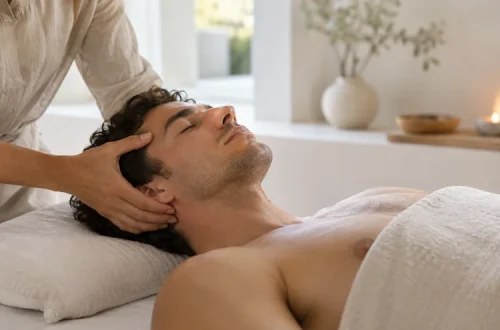
Gentle Scalp and Shoulder Massage
Some people prefer focused treatment around the scalp, neck, and upper shoulders.
These regions often become uncomfortable during long periods of computer work or sustained concentration.
Gentle contact may provide a calming sensory experience without requiring aggressive pressure.
For people who are sensitive to deep massage, a slower and lighter approach may be more comfortable.
However, therapists should avoid forceful pressure around sensitive neck structures and respect each patient’s preferred areas of contact.
4. Optimizing Pressure, Duration, and Frequency for Better Results
The effectiveness of massage may depend partly on how much treatment someone receives.
In clinical practice, this is often described as massage dosage.
Dosage includes pressure intensity, appointment duration, treatment frequency, and the total number of sessions.
Why Deeper Pressure Isn’t Always Better
A common misconception is that intense discomfort means massage is working.
Some patients even believe that a successful treatment must hurt.
However, excessive pressure can increase pain, provoke protective muscle tension, or create unnecessary soreness.
A more useful approach is to select pressure that feels comfortable and appropriate for the patient’s goals.
Therapists can encourage patients to describe the sensation during treatment.
A simple 0–10 pressure scale may help communication, although it isn’t a universally validated dosage measurement.
Rather than forcing everyone toward the same intensity, clinicians should adjust pressure according to individual tolerance.
Choosing an Appropriate Session Length
Research has investigated massage appointments of different durations, but there is no universally established session length for managing stress-related tension.
Some patients may prefer shorter, focused appointments.
Others may enjoy longer sessions that allow gradual relaxation and broader treatment.
For example, someone with limited time might benefit from a brief shoulder-focused session.
A person experiencing generalized muscular discomfort may prefer an extended appointment.
The important consideration is whether treatment provides meaningful benefit without causing unnecessary fatigue, discomfort, or expense.
Determining Treatment Frequency
There is also no single ideal treatment frequency for every patient.
Some clinical trials have used twice-weekly sessions, while others have examined different schedules.
However, research protocols shouldn’t automatically become universal recommendations.
A patient experiencing occasional work-related tension may have very different needs from someone managing persistent musculoskeletal pain.
Scheduling should reflect symptom severity, patient goals, treatment response, and practical considerations.
Regular reassessment is more useful than automatically recommending indefinite appointments.
5. Targeting Common Areas Affected by Stress-Related Tension
Stress-related discomfort can appear in different body regions.
However, symptoms shouldn’t automatically be attributed to stress simply because someone has a demanding lifestyle.
Clinical assessment remains important, especially when pain is persistent, unusual, or associated with other symptoms.
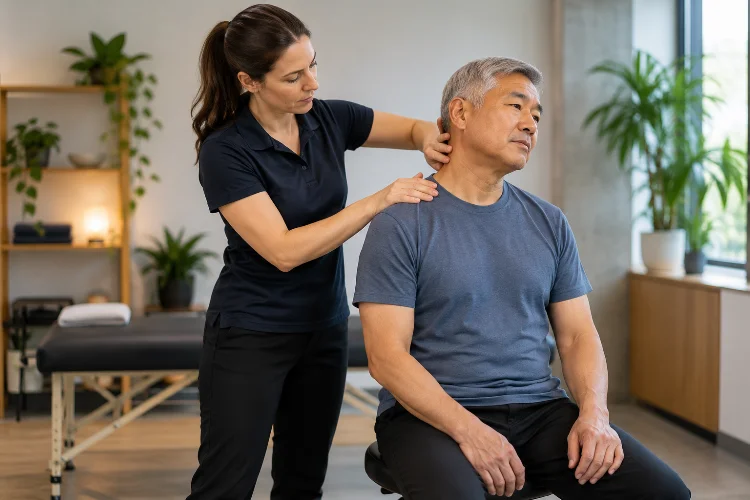
Neck and Upper Trapezius Tension
Neck and shoulder discomfort are common complaints among people who work at desks or spend long periods using electronic devices.
Sustained positions, limited movement variety, physical workload, and psychosocial stress may contribute.
Massage can be considered as one component of symptom management.
However, a 2024 Cochrane review involving 33 studies and 1,994 participants found that massage probably makes little or no difference to several outcomes compared with placebo massage for subacute or chronic neck pain.
The evidence was predominantly low certainty.
This doesn’t mean massage can never help.
Instead, it suggests that benefits may depend on the individual and that treatment should be evaluated alongside other options.
Jaw and Facial Muscle Tension
Some individuals clench their teeth during stressful situations or experience jaw discomfort associated with temporomandibular disorders.
Gentle external massage around the jaw may feel comfortable for selected patients.
However, jaw pain has many potential causes.
Persistent clicking accompanied by pain, difficulty opening the mouth, or recurring headaches may require assessment by an appropriately qualified healthcare professional.
Aggressive pressure around the face isn’t necessary for relaxation.
Upper Back and Lower Back Discomfort
The back may become uncomfortable during prolonged sitting, repetitive tasks, or physically demanding activities.
Stress can influence the experience of pain, but it rarely explains every case.
A therapist might use gentle or moderate soft-tissue techniques around the back while encouraging comfortable movement.
For example, someone experiencing upper-back tension after work may combine occasional massage with walking breaks and appropriate strengthening exercises.
The objective is to support physical comfort and everyday function rather than create dependence on repeated passive treatment.
6. Building a Personalized Massage Protocol for Stress-Related Tension
An effective treatment strategy should involve more than booking a massage whenever symptoms become unbearable.
A structured approach allows practitioners to understand the patient’s needs, select appropriate techniques, and evaluate progress.
The following framework is an illustrative planning model, not a scientifically validated universal massage protocol.
Phase One: Initial Assessment
The first appointment should begin with questions about symptoms, medical history, daily activities, and treatment goals.
A therapist might ask when muscle discomfort appears, what makes it worse, and whether symptoms interfere with work or sleep.
It’s also important to understand the patient’s previous experiences with massage.
Some people enjoy firm pressure, while others find physical touch uncomfortable.
A patient whose main problem is shoulder discomfort during computer work may have different priorities from someone seeking occasional relaxation.
These details help create a more personalized treatment plan.
Phase Two: Selecting Suitable Techniques
Following appropriate screening, the therapist can choose techniques that match the patient’s symptoms and preferences.
Gentle Swedish massage may be appropriate when relaxation is the primary goal.
Focused soft-tissue techniques might be considered when a patient reports localized muscular discomfort.
Pressure should remain tolerable, and the patient should feel comfortable requesting changes.
The therapist can also adjust positioning, treatment areas, and session pace.
A calm environment may improve the overall experience, but preferences for music, lighting, and conversation should never be assumed.
Phase Three: Monitoring Treatment Response
During treatment, therapists should regularly check whether pressure and positioning remain comfortable.
Some patients may relax quickly, while others need more time to settle.
Immediate comfort isn’t the only outcome that matters.
After the session, patients can assess changes in muscle discomfort, mobility, and overall relaxation.
They may also notice how long any benefit lasts.
Consistant follow-up helps distinguish meaningful improvements from brief sensations that disappear soon afterward.
Phase Four: Reassessing Progress
After several sessions, the therapist and patient should discuss whether the original goals are being achieved.
A patient might report better shoulder comfort but continued difficulty sleeping.
Another may experience reduced muscular discomfort without changes in perceived stress.
These responses suggest different next steps.
If the primary goal is physical comfort, changes to massage techniques or exercise recommendations might be useful.
If emotional stress remains the main problem, other approaches may deserve greater attention.
Continuing identical appointments without meaningful improvment shouldn’t be the default.
7. Combining Massage With Broader Stress Management and Safe Care
Massage may provide a useful opportunity to relax, but long-term stress management usually involves several strategies.
Persistent workload pressures, inadequate sleep, limited physical activity, and ongoing emotional challenges cannot always be resolved through hands-on treatment.
A more complete approach supports both immediate comfort and everyday self-management.
Physical Activity and Movement Breaks
Regular movement can help address some physical factors associated with muscle discomfort.
Walking, resistance training, and comfortable mobility exercises may support function and general well-being.
An office worker who experiences afternoon shoulder tension might experiment with shorter periods of uninterrupted sitting.
They could also incorporate suitable neck and upper-back exercises into their routine.
Massage may make movement feel easier temporarily, but building physical capacity generally requires active participation.
Breathing, Sleep, and Relaxation Habits
Relaxation practices can complement therapeutic massage.
Some people benefit from comfortable, slow breathing, mindfulness exercises, or quiet periods away from digital distractions.
Others may find regular physical activity more effective.
Sleep also matters because poor rest can increase discomfort and emotional reactivity.
An occassional massage may provide temporary relief, but it cannot consistently compensate for inadequate sleep or overwhelming responsibilities.
A personalized stress-management routine should address these broader influences.
Safety and Medical Considerations
Massage is generally considered low risk when performed appropriately.
However, certain medical conditions require precautions or alternative care.
According to the National Center for Complementary and Integrative Health, rare serious complications have included nerve injuries, fractures, and blood clots.
Individuals with suspected blood clots, significant bleeding risks, fragile bones, active infections affecting the treatment area, or recent surgery should seek appropriate professional guidance.
People taking anticoagulant medications may also require technique modifications.
Unexplained severe pain, progressive weakness, unusual numbness, or other concerning symptoms shouldn’t automatically be treated as ordinary muscle tension.
Measuring Meaningful Improvements
A successful massage experience isn’t necessarily defined by how relaxed someone feels immediately afterward.
Longer-term outcomes can be more informative.
Patients may monitor perceived stress, muscle discomfort, sleep quality, and their ability to perform normal activities.
For example, someone might notice that shoulder pain interferes less with work or that they feel more comfortable during evening activities.
These changes can be discussed during follow-up appointments.
If stress or anxiety significantly affects daily functioning, mental health assessment and evidence-based care should remain part of the discussion.
Massage can complement these treatments, but shouldn’t replace them.
Evidence-based massage approaches for stress-related tension provide a practical way to address certain physical symptoms associated with everyday stress.
Research suggests that massage may help reduce perceived stress, anxiety, and muscle discomfort in selected individuals. However, study findings vary, and long-term effectiveness remains uncertain.
Successful treatment depends on choosing comfortable techniques, adjusting pressure to individual needs, and regularly evaluating meaningful outcomes.
Swedish massage, gentle soft-tissue techniques, and targeted treatment may all have a role when appropriately selected.
Most importantly, massage should complement physical activity, healthy sleep habits, relaxation practices, and professional healthcare when necessary.
Ready to manage stress-related muscle tension more effectively? Consult a qualified massage therapist, discuss your symptoms and treatment preferences, and develop a personalized plan that prioritizes comfort, safety, and long-term well-being.