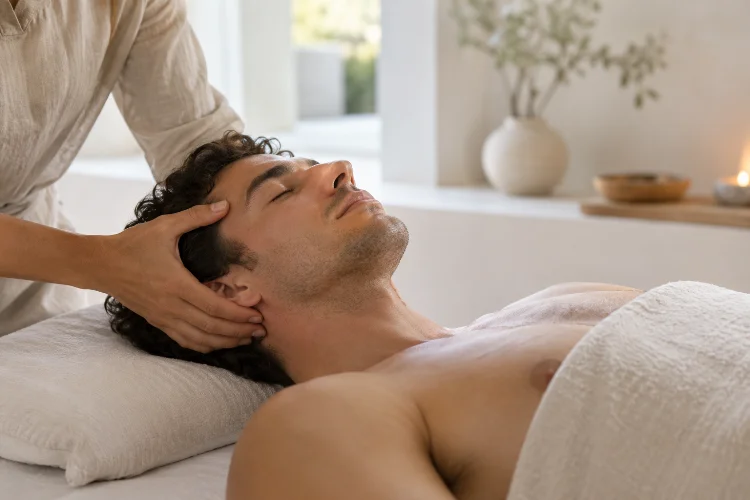
Have you ever walked out of a massage session feeling noticeably calmer, almost as if someone had turned down the volume on your stress?
Your shoulders feel lighter, your breathing seems easier, and the worries that followed you into the treatment room suddenly feel less overwhelming.
But what’s actually happening inside your body?
One popular explanation involves cortisol, a hormone closely connected to the body’s stress response.
You’ve probably heard that massage lowers cortisol, helping the body relax and recover. While this idea sounds reasonable, the scientific reality is a little more complicated.
Exploring cortisol responses to therapeutic massage sessions means looking beyond relaxation claims and examining how massage interacts with hormonal activity, the nervous system, and psychological stress.
Some clinical studies have reported changes in cortisol after massage, while others have found little or no significant effect compared with control treatments.
Interestingly, feeling more relaxed doesn’t always mean your cortisol levels have dropped.
In this article, we’ll explore the science behind cortisol, what researchers have discovered about therapeutic massage, and how these findings can guide more realistic approaches to stress management.
1. Understanding Cortisol and Its Role in the Stress Response
Cortisol is often described as the body’s primary stress hormone.
It’s produced by the adrenal glands, which sit above the kidneys, and plays an essential role in regulating metabolism, immune activity, blood pressure, and energy availability.
Although cortisol is commonly associated with stress, it isn’t inherently harmful.
In fact, your body needs it to function normally.
How the HPA Axis Controls Cortisol
Cortisol production is regulated through a communication network called the hypothalamic-pituitary-adrenal axis, or HPA axis.
When the brain detects certain physical or psychological challenges, the hypothalamus releases signals that stimulate the pituitary gland.
The pituitary then releases adrenocorticotropic hormone, commonly known as ACTH, which prompts the adrenal glands to produce cortisol.
This process helps the body respond to demanding situations.
For example, cortisol supports energy mobilization when you’re preparing for an important presentation, responding to an emergency, or performing intense exercise.
Once the challenge passes, feedback mechanisms help regulate hormone production.
Why Cortisol Naturally Changes Throughout the Day
Cortisol levels don’t remain constant.
They follow a daily biological rhythm, typically rising around the time you wake up and gradually declining toward the evening.
A 2024 review published in Endocrine Reviews explains that the cortisol awakening response involves a noticeable increase during approximately the first 30–45 minutes after waking.
This pattern is part of normal physiological regulation.
It also explains why measuring cortisol before and after a massage can be complicated.
If someone receives treatment during the afternoon, their hormone levels might decline naturally, regardless of whether massage contributed to the change.
Researchers must account for these fluctuations before attributing hormonal changes to therapy.
2. How Therapeutic Massage May Influence the Body’s Stress Systems
Massage involves more than mechanical pressure on muscles.
It creates a sensory experience involving touch, physical comfort, attention, and interaction between the patient and practitioner.
These elements may influence how people perceive stress and respond to their surroundings.
The Connection Between Massage and the Nervous System
The autonomic nervous system helps regulate involuntary functions such as heart rate, breathing, and digestive activity.
It includes sympathetic pathways involved in responding to challenges and parasympathetic pathways associated with restorative processes.
During a comfortable massage, some individuals experience slower breathing, reduced muscle guarding, and a feeling of physical calm.
Researchers have investigated whether these responses involve changes in autonomic activity.
However, measurements vary across studies, and not every massage produces the same physiological response.
A person’s expectation, comfort, and emotional state can also influence how a session feels.
Does Relaxation Automatically Mean Lower Cortisol?
Not necessarily.
Someone might report feeling significantly less anxious without demonstrating a measurable cortisol reduction.
That’s because perceived stress and hormonal activity aren’t identical measurements.
Cortisol is influenced by sleep, exercise, illness, medications, biological rhythms, and many other variables.
Imagine two people receiving identical Swedish massage treatments.
One may experience noticeable psychological relaxation, while the other’s cortisol changes very little.
Both experiences are possible, and the absence of a cortisol reduction doesn’t invalidate the first person’s sense of relief.
3. What Scientific Research Reveals About Massage and Cortisol
The relationship between massage and cortisol has attracted scientific attention for decades.
However, interpreting the research requires understanding an important distinction: observing a hormone change after massage isn’t the same as proving that massage caused it.
Early Research Reporting Cortisol Reductions
A widely discussed 2005 review by Tiffany Field and colleagues examined biochemical findings from massage studies involving different populations and health conditions.
The authors reported average cortisol reductions of approximately 31% across the studies they reviewed.
They also discussed changes in urinary serotonin and dopamine measurements.
These findings helped popularize the idea that massage produces substantial hormonal benefits.
However, the results weren’t equivalent to a single large randomized controlled trial.
Many of the underlying studies differed in methodology, participant characteristics, and treatment protocols.
Consequently, the reported percentage shouldn’t be interpreted as the amount by which everyone’s cortisol will fall after massage.
A More Critical Meta-Analysis
In 2011, Christopher Moyer and colleagues published a quantitative review examining whether therapeutic massage reliably reduces cortisol.
The researchers analyzed controlled comparisons instead of depending primarily on changes observed within massage groups.
Their findings were considerably more cautious.
Most between-group effect sizes were small, generally ranging from 0.05 to 0.30, and weren’t statistically significant.
The researchers concluded that massage-related cortisol reductions were usually too small to distinguish confidently from no effect.
This finding challenged the assumption that lowering cortisol explains the established short-term psychological benefits of massage.
Why These Studies Reached Different Conclusions
The difference largely involves how treatment effects are calculated.
Suppose someone has a cortisol reading of 12 arbitrary units before massage and 9 afterward.
That represents a 25% reduction.
However, imagine another person who rests quietly for the same period and experiences a similar decline.
In that situation, massage hasn’t demonstrated an additional hormonal effect beyond resting.
This is why controlled studies are important.
Comparing massage with appropriate control conditions helps researchers separate treatment-specific responses from natural biological changes.
4. Single Massage Sessions Versus Repeated Treatments
Another important research question concerns treatment frequency.
Does one massage produce a different hormonal response from several sessions spread across multiple weeks?
The answer remains uncertain, although preliminary studies offer useful insights.
Cortisol Changes After One Session
A 2010 study by Rapaport and colleagues compared a single 45-minute Swedish massage session with a light-touch control treatment.
The researchers measured cortisol and several other biological markers related to hormonal and immune activity.
Compared with light touch, Swedish massage produced a small effect-size decrease in cortisol.
Other biological differences were also reported.
However, this was a preliminary study involving healthy adults, and its results shouldn’t be generalized to all patients or massage styles.
It suggested that massage can produce measurable physiological responses under certain conditions, but didn’t establish a reliable hormone-lowering effect for everyone.
What Happens With Regular Massage?
A follow-up study published in 2012 examined Swedish massage delivered once or twice weekly over five weeks.
Both schedules were compared with corresponding light-touch control conditions.
Interestingly, the results differed according to treatment frequency.
Weekly massage produced minimal changes in HPA-axis functioning, whereas twice-weekly sessions were associated with reductions in some cortisol measures compared with control treatment.
The findings also revealed different patterns involving other hormones and immune markers.
However, the sample was relatively small, and researchers emphasized the need for larger confirmatory studies.
Does More Massage Mean Better Results?
Not automatically.
These findings don’t establish that two weekly massages are the ideal schedule for cortisol regulation.
Treatment frequency should reflect individual needs, preferences, costs, and the intended clinical benefit.
Some people may find occasional sessions sufficient for relaxation, while others prefer more regular appointments.
Rather than promising a specific hormonal outcome, therapists should evaluate whether repeated treatment provides meaningful improvements in comfort, stress perception, or daily functioning.
5. How Researchers Measure Cortisol Before and After Massage
Understanding cortisol research requires knowing how hormone levels are actually measured.
Different testing methods capture different aspects of hormonal activity.
Salivary Cortisol Testing
Saliva testing is commonly used in stress research because it’s relatively convenient and noninvasive.
Participants provide saliva samples at specified times, which are analyzed for cortisol concentration.
Researchers may collect samples before and after treatment or repeatedly throughout the day.
However, the timing must be carefully controlled.
Eating, exercise, waking schedules, and medications may influence measurements.
A review of salivary cortisol methodology highlighted how biological and sampling-related factors can alter research results.
Blood Cortisol Measurements
Blood testing measures circulating cortisol and may be used in clinical or research settings.
However, collecting blood introduces additional challenges.
Needles, medical environments, and anticipation of testing can themselves produce stress responses in some participants.
Blood measurements may also differ from salivary results because saliva primarily reflects the unbound fraction of circulating cortisol.
These differences mean that findings from the two methods shouldn’t always be treated as interchangeable.
Why Timing and Study Design Matter
Imagine one participant receiving massage at 9 a.m. and another at 5 p.m.
Their cortisol readings may differ substantially even if both feel equally relaxed.
Researchers therefore need consistant sampling schedules and suitable control groups.
For clinical research, factors such as recent exercise, sleep patterns, medications, and time since awakening should be documented.
It is also important to distinguish immediate effects from longer-term hormonal patterns.
A brief reduction following one treatment doesn’t prove that massage permanently changes cortisol regulation.
6. Do Different Massage Techniques Produce Different Cortisol Responses?
Therapeutic massage includes several approaches, from gentle Swedish techniques to more focused deep tissue treatments.
Each creates a different sensory experience, but research hasn’t established a single superior technique for lowering cortisol.
Swedish Massage and Relaxation
Swedish massage commonly involves long gliding strokes, kneading, and gentle rhythmic movements.
These techniques are frequently used in studies investigating relaxation and physiological stress responses.
A comfortable session may encourage patients to rest and temporarily disengage from everyday demands.
For individuals experiencing muscular tension alongside psychological stress, this can be a worthwhile benefit.
However, the scientific evidence doesn’t support guaranteeing a specific reduction in cortisol.
Deep Tissue Massage and Physical Sensitivity
Deep tissue massage uses more focused pressure, often targeting uncomfortable muscular areas.
Some people appreciate stronger techniques, while others find them unpleasant or overstimulating.
Importantly, deeper pressure doesn’t automatically produce greater relaxation or better hormonal outcomes.
A session that causes significant discomfort could create a different stress experience from gentle treatment.
Therapists should prioritize patient comfort, medical history, and individual preferences rather than assuming intensity determines effectiveness.
The Role of the Treatment Environment
The surrounding enviroment can influence the massage experience.
Lighting, room temperature, noise, privacy, and the therapist’s communication style all contribute to comfort.
For example, a quiet room with an agreeable temperature may help someone relax more easily than a noisy, unfamiliar setting.
However, environmental comfort can also influence people who simply rest without receiving massage.
This makes it important for researchers to distinguish the effects of therapeutic touch from the benefits of quiet relaxation.
7. Why Cortisol Responses Differ Between Individuals
One reason cortisol research produces mixed results is that people don’t begin treatment in identical physiological states.
Individual differences can influence hormonal measurements and subjective responses.
Baseline Stress and Emotional State
Someone arriving after a demanding workday may feel very different from a person who has just spent an hour relaxing.
Their baseline stress perception and hormone levels may also differ.
However, feeling stressed doesn’t always correspond to consistently elevated cortisol.
Acute and chronic stress may produce different hormonal patterns depending on the individual and circumstances.
For this reason, researchers shouldn’t automatically classify every anxious participant as having high cortisol.
Sleep Quality and Recovery
Sleep and cortisol regulation are closely connected.
Irregular sleep schedules or disrupted rest may affect the timing of normal hormonal rhythms.
Someone working rotating night shifts may therefore display a different cortisol pattern from a person with a stable daytime schedule.
A massage session might improve their perceived relaxation without correcting an underlying sleep-related disruption.
This is one reason stress management should consider daily routines rather than relying entirely on individual treatments.
Age, Medications, and Health Conditions
Hormonal activity can also vary with age, medications, and medical conditions.
Corticosteroid medication, for example, can substantially influence the body’s cortisol regulation.
Certain endocrine disorders may produce abnormal cortisol levels that require medical investigation.
Massage is not an established treatment for adrenal insufficiency, Cushing syndrome, or other cortisol-related endocrine diseases.
Patients experiencing concerning symptoms should seek appropriate medical evaluation rather than using massage as a form of hormone correction.
Personal Preference and Sense of Safety
Not everyone enjoys physical touch in the same way.
One person may find massage deeply reassuring, while another feels uncomfortable being touched by an unfamiliar practitioner.
These individual experiences can influence perceived relaxation.
Therapists should obtain informed consent, explain treatment procedures, and encourage patients to communicate their preferences.
A session is more likely to feel supportive when the person receiving it maintains control over pressure, positioning, and treatment boundaries.
8. Practical Strategies for Using Massage in Stress Management
The mixed cortisol evidence doesn’t mean therapeutic massage has no practical value.
It means stress-management benefits should be evaluated using outcomes that matter to the person receiving treatment.
Focus on Experience Rather Than Hormone Numbers
Most people booking a massage don’t need laboratory cortisol measurements.
They want to feel more comfortable, manage tension, or create time for recovery.
A useful approach is to monitor these goals directly.
For example, someone may rate their perceived stress from zero to ten before and after treatment.
They might also track sleep satisfaction, headache frequency, or the ease with which they relax during the evening.
These observations don’t establish hormonal changes, but they can help determine whether massage is beneficial.
Combine Massage With Other Recovery Habits
Stress management usually works best when several supportive habits are considered together.
Regular physical activity, adequate sleep, manageable work routines, and relaxation practices can contribute to overall well-being.
For example, someone experiencing persistent work-related tension might combine occasional massage with short walking breaks and a more regular bedtime.
Massage can provide a welcome opportunity to rest, but it shouldn’t be expected to compensate for every ongoing source of stress.
People experiencing persistent anxiety or significant emotional difficulties may also benefit from evidence-based psychological care.
Set Realistic Expectations for Treatment
Some massage advertisements promise to eliminate stress hormones, reset the nervous system, or restore hormonal balance within one session.
These claims go beyond what current evidence can establish.
A more reasonable expectation is that massage may help some people feel temporarily relaxed, reduce certain pain symptoms, or improve their overall sense of comfort.
Occassionally, a person might notice little immediate change.
That doesn’t necessarily mean the session was performed incorrectly.
Responses vary, and treatment should be adjusted according to the individual’s goals and experience.
9. Future Research and Important Safety Considerations
Researchers are continuing to investigate how therapeutic touch influences physiological and psychological processes.
Future studies may help clarify which treatment approaches, patient groups, and session schedules produce meaningful results.
What Better Research Needs to Examine
Larger randomized trials could provide more reliable estimates of massage-related cortisol changes.
Ideally, studies should include appropriate comparison groups, standardized treatment procedures, and well-controlled sampling schedules.
They should also distinguish short-term hormone fluctuations from sustained changes over several weeks or months.
Combining cortisol measurements with anxiety ratings, sleep outcomes, and daily functioning may produce a more complete understanding.
After all, a statistically measurable biochemical change isn’t automatically a meaningful health improvement.
Prioritizing Safe and Appropriate Care
Massage is generally considered relatively low risk, but some individuals require additional precautions.
According to the National Center for Complementary and Integrative Health, rare serious adverse events have been reported, particularly with vigorous techniques or in people with increased vulnerability.
Patients with suspected blood clots, acute infections, unstable fractures, or certain medical conditions should seek professional guidance before treatment.
Anyone taking medications that increase bruising risk may also require modified techniques.
A qualified practitioner should discuss relevant medical history, maintain informed consent, and stop treatment when concerning symptoms develop.
Finally, laboratory cortisol testing should be requested and interpreted by appropriate healthcare professionals when clinically indicated.
Routine cortisol monitoring isn’t necessary simply to determine whether an ordinary relaxation massage was enjoyable or beneficial.
Exploring cortisol responses to therapeutic massage sessions reveals a fascinating but complex relationship between touch, stress perception, and hormonal regulation.
Although some studies have reported reductions in cortisol following massage, larger quantitative analyses suggest that these effects are generally small, inconsistent, or difficult to distinguish from natural changes.
That doesn’t mean massage lacks value.
For many individuals, a comfortable therapeutic session may provide relaxation, temporary symptom relief, and an opportunity to step away from daily pressures.
The important distinction is that feeling better doesn’t necessarily require a measurable reduction in stress hormones.
Interested in making massage part of your wellness routine? Consider working with a qualified therapist, establish realistic treatment goals, and combine bodywork with healthy sleep, regular movement, and other evidence-informed stress-management practices.
Prioritize meaningful well-being over promises of instant hormonal transformation.