Recovering from an injury can be frustrating. One day, you’re moving comfortably through your usual routine. The next, a strained muscle, twisted ankle, or painful shoulder makes even simple activities feel surprisingly difficult.
And while rest might seem like the obvious solution, effective injury recovery usually involves much more.
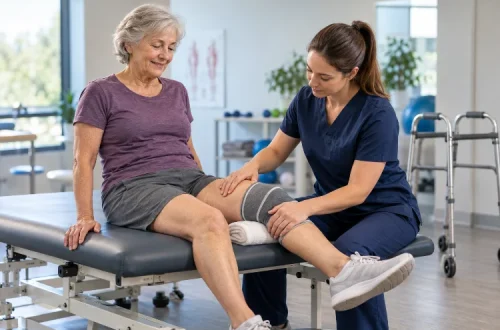
Modern rehabilitation focuses on restoring movement, rebuilding strength, managing discomfort, and gradually returning to normal activities. Therapeutic massage is sometimes included in this process as a complementary treatment.
But does massage actually help injuries heal faster?
The answer is more complicated than many wellness advertisements suggest.
Integrating massage therapy into post-injury recovery programs may help some people manage muscular discomfort, reduce perceived stiffness, and feel more comfortable during rehabilitation.
However, the benefits depend on the injury, treatment timing, massage technique, and individual response.
Massage cannot replace appropriate medical assessment, progressive exercise, or the body’s natural healing processes.
This guide explores how therapeutic massage fits into injury rehabilitation, which techniques may be appropriate, what scientific evidence suggests, and how patients can develop safer, more effective recovery strategies.
1. Understanding the Role of Massage Therapy in Injury Recovery
Injury rehabilitation involves helping damaged or irritated tissues recover while restoring the physical abilities needed for everyday life.
Depending on the injury, recovery may include medical treatment, temporary activity modification, strengthening exercises, mobility training, and gradual exposure to demanding movements.
Massage therapy can sometimes support these interventions by addressing discomfort in surrounding soft tissues.
How Injuries Affect Muscles and Movement
When an injury occurs, the body initiates biological processes designed to protect and repair affected structures.
Inflammation, swelling, tenderness, and temporary movement limitations are common early responses.
These changes are not automatically signs that something is going wrong.
For example, a mild ankle sprain may cause swelling around the joint, making normal walking uncomfortable.
As symptoms improve, the person gradually rebuilds mobility, balance, and strength.
The American Academy of Orthopaedic Surgeons explains that soft-tissue injuries commonly involve muscles, tendons, and ligaments, with recovery requirements varying according to injury type and severity.
What Massage Can and Cannot Accomplish
Therapeutic massage involves applying controlled pressure and movement to muscles and other soft tissues.
Some people experience temporary reductions in pain, improved relaxation, and greater movement comfort following treatment.
These effects may make rehabilitation activities feel more manageable.
However, massage has not been proven to directly accelerate the structural repair of torn ligaments, damaged tendons, or fractured bones.
It also cannot replace exercise-based rehabilitation when strength, coordination, and physical capacity need rebuilding.
The most appropriate role for massage is therefore supportive rather than curative.
2. Choosing the Right Time for Massage After an Injury
Timing is one of the most important considerations when introducing massage into recovery.
A technique that feels appropriate several weeks after an injury may be unsuitable immediately after the damage occurs.
Rather than following a fixed schedule, treatment should reflect tissue healing, symptoms, medical restrictions, and individual tolerance.
The Acute Phase: Protecting Injured Tissues
The acute stage generally covers the first several days following an injury.
During this period, tenderness, swelling, bruising, and protective muscle guarding may be prominent.
Direct massage over a newly injured area is usually avoided, particularly when bleeding, significant inflammation, or tissue disruption is suspected.
Applying vigorous pressure too early could worsen pain or aggravate damaged tissues.
The PEACE and LOVE framework, described in the British Journal of Sports Medicine, emphasizes protection, appropriate loading, education, and progressive activity during soft-tissue recovery.
The approach encourages avoiding unnecessary interventions that might disrupt early recovery.
However, injury management should be individualized rather than governed by a rigid timeline.
The Subacute Phase: Reintroducing Comfortable Movement
As acute symptoms settle, patients often begin restoring normal movement.
This stage may involve gentle exercises, controlled weight-bearing activities, and gradually increasing physical demands.
Massage might be considered when medical assessment indicates that the affected tissues can tolerate it.
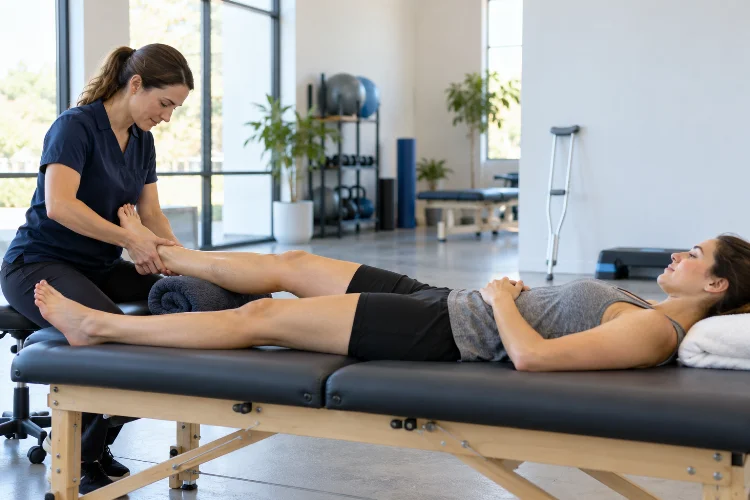
For example, someone recovering from a mild calf strain may experience discomfort in nearby muscles that have been working differently.
Gentle treatment around those areas could provide temporary relief.
Nevertheless, pressure should be adjusted carefully, and therapists should avoid aggressive work directly over vulnerable healing tissues.
The Later Rehabilitation Phase
During later recovery, the focus gradually shifts toward strength, endurance, coordination, and returning to regular activities.
Massage may be included to manage residual muscular discomfort or help patients relax between demanding rehabilitation sessions.
A recreational runner returning after a hamstring injury might receive occasional massage alongside progressive strengthening and running exercises.
The treatment should support the rehabilitation program rather than replace its essential components.
Clinical readiness matters more than simply counting the number of days since an injury occurred.
3. Therapeutic Massage Techniques Used During Rehabilitation
Different massage methods produce different experiences, but no single technique is universally superior.
Treatment selection should consider the patient’s symptoms, stage of recovery, sensitivity, and personal preferences.
Qualified practitioners should also recognize when manual therapy is unlikely to provide meaningful benefits.
Swedish Massage for General Comfort
Swedish massage commonly involves gentle gliding movements, kneading, and rhythmic pressure.
It is often associated with relaxation and general muscular comfort.
During later rehabilitation, lighter massage may be preferable for patients who remain sensitive to pressure.
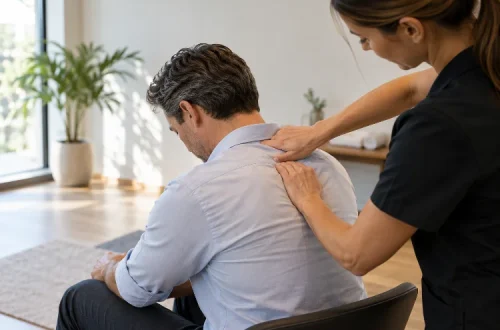
For example, someone recovering from a minor shoulder injury might find gentle treatment around unaffected upper-back muscles relaxing.
However, comfort is the primary goal in this situation.
Claims that Swedish massage directly speeds tissue regeneration are not supported by strong clinical evidence.
Deep Tissue Massage for Persistent Muscular Discomfort
Deep tissue massage uses slower movements and firmer pressure to address perceived tightness or localized tenderness.
It may be considered during later stages of recovery when tissues are sufficiently tolerant.
Someone returning to recreational exercise might experience lingering muscular discomfort around an area affected by compensatory movement.
Carefully applied pressure could provide short-term symptom relief.
However, stronger pressure does not necessarily produce better outcomes.
Deep tissue massage should be avoided over recent injuries, significant bruising, or structures that remain medically vulnerable.
Myofascial Release Techniques
Myofascial release involves sustained pressure or stretching directed toward muscles and their surrounding connective tissues.
Some practitioners use these techniques when patients describe stiffness or difficulty moving comfortably.
For instance, a patient recovering from a period of reduced shoulder activity may report tightness around the upper back.
Gentle manual techniques might improve perceived comfort during movement.
However, claims that massage permanently breaks up fascial adhesions or mechanically restructures connective tissue remain inadequately supported.
The relevant outcome is whether the person experiences meaningful improvement, not whether an assumed tissue restriction has been physically released.
Trigger Point and Targeted Soft-Tissue Therapy
Trigger point techniques involve pressure applied to localized areas of muscular tenderness.
Practitioners may use them when discomfort appears concentrated in specific muscle regions.
However, the biological interpretation of trigger points remains debated, and identifying them reliably through touch can be challenging.
Consequently, therapists should prioritize patient-reported symptoms and functional outcomes.
Targeted treatment should not become an unnecessarily painful search for supposed muscle knots.
4. Combining Massage With Physical Therapy and Exercise
Massage is most useful when it complements an active recovery plan.
Hands-on treatment may temporarily reduce discomfort, but rehabilitation usually requires progressively rebuilding physical abilities.
These improvements are generally developed through appropriately prescribed movement and exercise.
Massage and Progressive Strengthening
Consider someone recovering from a moderate ankle sprain.
Initially, the person may struggle to walk normally because of pain, swelling, and reduced confidence.
As recovery progresses, a physiotherapist might introduce calf strengthening, balance exercises, and controlled single-leg movements.
Massage could be considered for surrounding muscular discomfort once clinically appropriate.
However, improving ankle stability requires more than making nearby muscles feel relaxed.
Strength, balance, and functional training remain essential.
Massage and Mobility Training
Reduced movement after injury can sometimes contribute to perceived stiffness.
Gentle mobility exercises allow patients to gradually regain confidence in using the affected area.
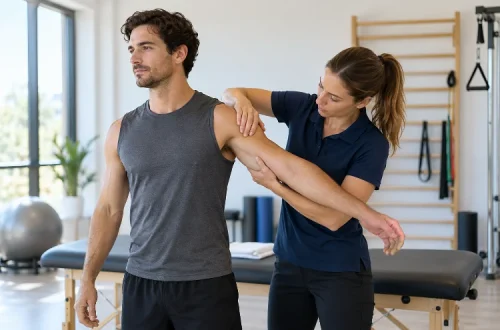
For example, someone recovering from a minor shoulder strain may begin controlled arm movements within an appropriate range.
A therapist might combine comfortable soft-tissue treatment with movement reassessment.
The important question is whether the patient can perform useful activities more comfortably afterward.
Temporary flexibility improvements should not be mistaken for complete tissue healing.
Coordinating With Healthcare Professionals
Collaboration becomes especially important when rehabilitation involves multiple providers.
A physician may diagnose the injury and establish medical restrictions, while a physiotherapist designs the exercise progression.
A massage therapist can contribute supportive treatment within their professional scope.
Clear communication helps prevent contradictory recommendations.
For example, if a surgeon has prohibited pressure around a healing repair, the massage therapist must respect that restriction.
Shared treatment goals and accurate documentation create a more consistant approach to recovery.
5. What Scientific Research Says About Massage and Recovery
Massage therapy is widely used in sports and rehabilitation settings.
However, popularity does not necessarily indicate strong scientific support.
Research findings vary according to the condition studied, treatment technique, comparison group, and outcomes measured.
Evidence for Sports Recovery
A 2020 systematic review and meta-analysis published in BMJ Open Sport & Exercise Medicine examined 29 studies involving 1,012 participants.
Researchers evaluated the effects of massage on strength, jumping, sprinting, endurance, flexibility, fatigue, and delayed-onset muscle soreness.
The review found no convincing evidence that massage improved strength, sprint performance, endurance, or other major performance measures.
However, small improvements were observed in flexibility and delayed-onset muscle soreness.
These findings suggest massage may improve how athletes feel after physical activity without necessarily improving performance.
Importantly, exercise-related muscle soreness is different from an acute muscle tear or ligament injury.
Results from sports recovery studies cannot automatically be applied to damaged tissues.
Evidence for Pain Reduction
A 2024 systematic review published in JAMA Network Open investigated evidence for massage therapy in painful adult health conditions.
Researchers identified 129 systematic reviews, although only 41 assessed the certainty or quality of evidence.
Seventeen reviews covering 13 health conditions were included in the final evidence map.
Only seven conclusions achieved moderate-certainty evidence, while none reached high certainty.
Most conclusions were supported by low- or very-low-certainty evidence.
This doesn’t mean massage has no clinical value.
Rather, it suggests that benefits may be modest, condition-specific, or insufficiently studied.
Understanding Research Limitations
One challenge is that massage studies frequently use different treatment protocols.
Pressure intensity, session duration, massage style, and treatment frequency may vary considerably.
Some studies also include small participant groups or limited follow-up periods.
These differences make it difficult to establish an ideal massage schedule for every injury.
The National Center for Complementary and Integrative Health notes that research supports possible benefits for selected pain conditions, but evidence quality and long-term effectiveness remain important limitations.
For rehabilitation planning, the most responsible approach is to treat massage as an optional intervention whose value should be evaluated individually.
6. Designing an Individualized Post-Injury Massage Program
An effective rehabilitation plan begins with understanding the injury and the patient’s goals.
The objective is not to schedule as many massage appointments as possible.
Instead, treatment should be included only when its expected benefits justify the time, cost, and potential risks.
Start With a Proper Clinical Assessment
Before massage begins, the healthcare team should clarify the injury diagnosis, healing status, and any necessary precautions.
This assessment may include reviewing symptoms, medical history, medications, swelling, functional limitations, and previous treatment.
For example, a person with a suspected tendon rupture needs medical evaluation rather than immediate deep tissue massage.
Similarly, unexplained severe pain after an injury should not automatically be attributed to muscular tightness.
A good assessment prevents unnecessary treatment and helps identify more serious problems.
Establish Functional Recovery Goals
Recovery goals should reflect real activities.
A person with a wrist injury might want to type comfortably, carry groceries, or return to recreational tennis.
Someone recovering from a knee injury may prioritize climbing stairs or walking without substantial discomfort.
These outcomes are more meaningful than simply reporting that muscles feel softer.
Treatment success should be measured by improvements in the activities that matter to the patient.
Adjust Treatment Frequency Individually
There is no universally established massage frequency that guarantees faster injury recovery.
Some patients may prefer occasional sessions when discomfort interferes with rehabilitation.
Others may discover that massage adds little benefit compared with their existing exercise program.
A sensible approach is to begin with a limited, clinically appropriate trial and monitor the response.
If symptoms remain unchanged or treatment causes lasting discomfort, the plan should be reconsidered.
Monitor Progress and Treatment Response
A rehabilitation team may use pain ratings, mobility measurements, strength assessments, and functional tests.
Consider a patient who initially experiences shoulder pain when reaching overhead.
Following several weeks of rehabilitation, the patient reports less pain and improved movement.
Massage might have contributed to comfort, but improvements could also reflect exercise, natural healing, and activity modification.
Regular reassesment helps determine whether each intervention remains useful.
7. Safety Precautions and Returning to Normal Activity
Massage is generally considered a relatively low-risk intervention when performed appropriately.
However, certain injuries and medical conditions increase the risk of complications.
Safety should always take priority over short-term symptom relief.
Situations Where Massage Should Be Avoided or Modified
Massage should not be applied directly over suspected fractures, fresh muscle tears, significant hematomas, open wounds, or infected tissues.
Suspected deep vein thrombosis is another important contraindication requiring urgent medical assessment.
Patients taking anticoagulants or living with bleeding disorders may face increased bruising risks.
Severe osteoporosis, recent surgery, and certain neurological conditions can also require modifications or specialist approval.
The NCCIH reports rare but serious massage-related complications, including blood clots, nerve injuries, and fractures, particularly in higher-risk individuals or following vigorous treatment.
If an injury involves marked deformity, severe swelling, an inability to bear weight, or progressive neurological symptoms, medical evaluation should take priority.
Understanding Normal Discomfort Versus Warning Signs
Some people experience mild temporary soreness following massage.
However, severe pain, increasing swelling, pronounced bruising, or worsening symptoms are not signs of effective treatment.
Patients should communicate immediately if pressure becomes uncomfortable.
Therapists should respond by adjusting or stopping the intervention.
A properly designed rehabilitation program does not require patients to endure excessive pain to demonstrate progress.
Returning to Sport and Daily Activities
One of the biggest mistakes during recovery is returning to demanding activity simply because pain has temporarily improved.
An athlete may feel comfortable after massage but still lack the strength or coordination needed for safe participation.
The 2016 international consensus statement on returning to sport emphasizes a gradual process involving return to participation, return to sport, and return to performance.
Clinical decisions should consider physical capacity, psychological readiness, sport-specific demands, and reinjury risk.
For example, a football player recovering from a hamstring strain may need to demonstrate tolerance for sprinting, acceleration, and changing direction.
Massage cannot replace these assessments.
Building Long-Term Injury Resilience
Successful rehabilitation continues beyond the point when everyday discomfort disappears.
Maintaining strength, gradually increasing training loads, sleeping adequately, and managing fatigue can contribute to long-term physical resilience.
Patients should also develop confidence in recognizing normal exercise sensations and identifying symptoms that warrant professional guidance.
Massage may remain a personal recovery preference, but it should not become a requirement for feeling capable of movement.
The ultimate objective is independence, not permanent dependence on passive treatment.
Integrating massage therapy into post-injury recovery programs can offer additional support for people managing discomfort, perceived muscle stiffness, and the challenges of rehabilitation.
However, effective recovery depends on much more than hands-on treatment.
Appropriate medical assessment, progressive strengthening, movement training, and realistic recovery goals remain central to restoring physical function.
Massage may help some patients feel more comfortable during this process, but it cannot guarantee faster tissue healing or prevent future injuries.
Treatment timing, professional qualifications, patient preferences, and safety considerations should guide every decision.
If you’re recovering from a sports injury or everyday musculoskeletal problem, speak with a qualified healthcare professional about whether therapeutic massage is appropriate for your situation.
A personalized rehabilitation plan offers a better foundation for returning to your normal activities safely and confidently.