Imagine arriving at work with a packed schedule, endless emails, and three meetings before lunch. By midafternoon, your shoulders feel tight, your neck aches, and your concentration is starting to disappear.
Sound familiar?
For millions of employees, workplace stress isn’t just an occasional inconvenience. It’s something that builds throughout the working week, affecting physical comfort, emotional well-being, and sometimes even job satisfaction.
Organizations are increasingly recognizing that employee wellness requires more than motivational posters or occasional team-building activities.
That’s where integrating massage therapy into workplace stress management becomes an interesting option.
Offering short, convenient massage sessions at work may help employees unwind, manage temporary muscular discomfort, and enjoy a much-needed moment of relaxation.
However, massage shouldn’t be mistaken for a complete solution to excessive workloads, poor management, or unhealthy working conditions.
The most effective approach combines supportive wellness activities with meaningful organizational improvements.
In this guide, we’ll explore how workplace massage programs work, what scientific research says about their benefits, and how businesses can introduce therapeutic massage as part of a practical, employee-centered stress management strategy.
1. Understanding Workplace Stress and Its Impact on Employee Health
Workplace stress develops when job demands exceed an employee’s available resources, coping capacity, or sense of control.
It can arise from demanding deadlines, unclear responsibilities, difficult relationships, unpredictable schedules, or inadequate support.
Although short periods of pressure are common in professional life, ongoing exposure to stressful working conditions can affect physical and psychological health.
Why Workplace Stress Deserves Serious Attention
According to the World Health Organization’s September 2026 fact sheet, depression and anxiety are associated with approximately 12 billion lost working days globally each year, representing an estimated US$1 trillion in lost productivity.
These figures describe the wider economic impact of mental health conditions, not the amount of productivity that massage could recover.
They do, however, demonstrate why organizations should take employee mental health seriously.
The WHO also identifies excessive workloads, job insecurity, discrimination, and limited control over work as important psychosocial risks.
These problems cannot be resolved simply by encouraging employees to relax.
Employers need to examine working conditions while providing appropriate support for individual well-being.
The Physical Side of Occupational Stress
Stress can influence physical experiences, including muscular tension, headaches, fatigue, and changes in sleep.
For example, someone managing repeated deadlines might notice they clench their jaw or hold their shoulders in a guarded position.
Another employee may experience discomfort after remaining in one position for extended periods.
However, muscle pain isn’t always caused by stress, and poor posture shouldn’t automatically be blamed for every workplace ache.
Physical workloads, insufficient movement, medical conditions, and individual sensitivity may also contribute.
Understanding this distinction helps employers avoid oversimplifying employee health problems.
2. How Massage Therapy Can Support Workplace Stress Management
Massage therapy involves the controlled application of pressure and movement to muscles and surrounding soft tissues.
In workplace wellness programs, its main purpose is usually to provide relaxation, temporary discomfort relief, and an opportunity to disconnect from work demands.
Supporting Relaxation and Physical Comfort
A comfortable massage session may help an employee feel calmer and less physically tense.
Gentle strokes, rhythmic pressure, and focused attention on sensitive muscular areas can create a pleasant sensory experience.
For instance, someone experiencing neck and upper-back discomfort after a demanding morning may feel more comfortable following a short seated massage.
This doesn’t necessarily mean that the massage permanently changed the underlying tissues.
The benefit may involve temporary changes in pain perception, relaxation, and movement tolerance.
According to the National Center for Complementary and Integrative Health, massage may help certain types of musculoskeletal pain, although the evidence varies and benefits are often short-term.
Creating Opportunities for Mental Recovery
Modern workplaces frequently encourage constant availability.
Employees move between meetings, answer notifications, and switch tasks without giving themselves much uninterrupted recovery time.
A scheduled massage session can provide a structured break from these demands.
Even a brief period away from emails and urgent conversations may feel restorative.
However, part of that benefit could come from resting itself rather than massage specifically.
Employers should therefore view massage as one optional relaxation opportunity, not a scientifically proven method of restoring concentration or eliminating stress hormones.
Supporting a Positive Wellness Culture
When introduced thoughtfully, an employee massage program may signal that the organization values workplace well-being.
Employees may appreciate having access to convenient services that would otherwise require traveling to a separate appointment.
However, the message must be genuine.
Offering free massages while expecting staff to work unreasonable hours can create frustration rather than trust.
A supportive wellness culture develops when practical benefits are accompanied by reasonable workloads, respectful management, and healthy workplace expectations.
3. What Scientific Research Says About Workplace Massage
Workplace massage has been investigated in several clinical and occupational settings.
Some studies report improvements in perceived stress and physical comfort, while others show less convincing results.
The overall evidence remains promising but limited.
Research Involving Oncology Nurses
A randomized controlled trial published in the International Journal of Therapeutic Massage & Bodywork in 2021 examined chair massage among 60 female oncology nursing professionals in Brazil.
Participants in the massage group received 15-minute sessions twice weekly for three weeks.
Compared with a control group receiving no massage intervention, the treatment group experienced a statistically significant reduction in measured stress.
Researchers also reported improvements in several measures of pain interference with daily activities.
These findings suggest that short workplace massage sessions may be useful for certain healthcare professionals.
However, the study involved a relatively small and specific population.
Its results shouldn’t be interpreted as proof that every workforce will experience the same benefits.
A 2025 Study of Healthcare Professionals
Another randomized trial, published in Health Science Reports in September 2025, investigated automated massage chair therapy among 24 healthcare professionals.
Participants received either massage chair sessions or progressive muscle relaxation.
Both interventions were delivered for 15 minutes, three times weekly, over four weeks.
The massage group demonstrated reductions in certain depression and perceived stress scores at selected measurement points.
However, the small sample and comparison with another relaxation intervention limit conclusions about whether massage is consistently superior.
The study adds useful preliminary evidence, but larger trials are needed.
Why Results Should Be Interpreted Carefully
Not all research has demonstrated clear advantages.
A 2015 exploratory randomized study involving employees from four workplaces compared mechanical massage, mental training, combined interventions, quiet rest, and a control condition.
Researchers found no statistically significant differences between groups on the psychological traits examined.
Some participants improved within their individual groups, but those changes didn’t establish a distinctive massage effect.
This highlights an important point: taking a break, receiving attention, or sitting quietly may provide benefits of their own.
Businesses should therefore avoid guaranteeing reductions in anxiety, absenteeism, or employee burnout solely because a massage program has been introduced.
4. Choosing Suitable Massage Services for the Workplace
One of the biggest advantages of workplace massage is its flexibility.
Organizations can offer different formats depending on available space, workforce preferences, schedules, and budgets.
On-Site Chair Massage
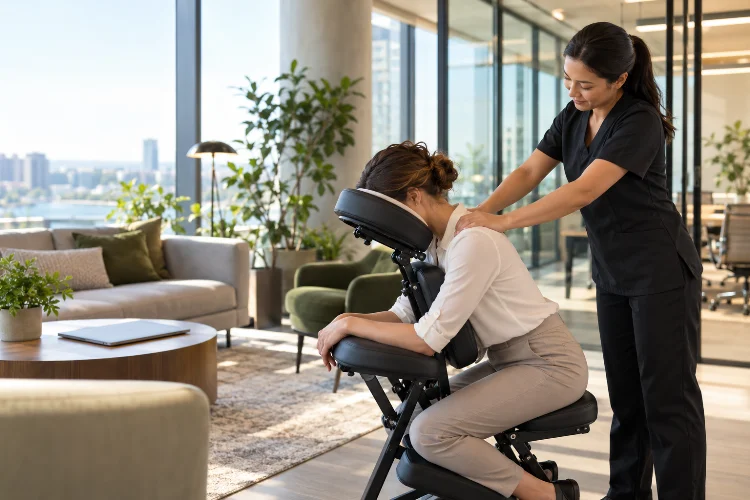
Chair massage is often a practical option for office environments.
Employees remain fully clothed while sitting in a specially designed massage chair that supports their head, chest, and arms.
The therapist typically focuses on the shoulders, neck, upper back, arms, or hands.
Sessions lasting approximately 10–20 minutes are commonly used in workplace programs, although this is a scheduling convention rather than an established ideal treatment duration.
For example, a company might organize appointments during designated wellness hours.
Employees can recieve a short treatment without traveling to a spa or changing clothes.
This format also avoids many of the logistical challenges associated with full-body massage.
Table Massage for Dedicated Wellness Facilities
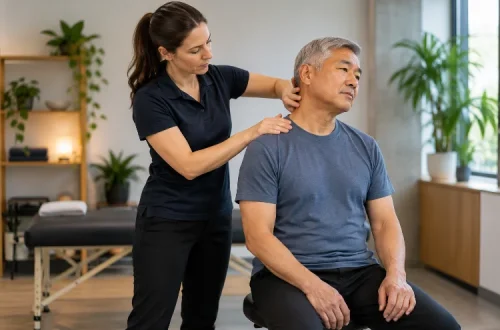
Organizations with suitable facilities may consider table-based massage.
This allows a wider selection of body positions and treatment techniques.
However, it requires greater attention to privacy, appropriate draping, accessibility, cleaning, and employee consent.
A dedicated treatment room should be quiet, comfortable, and separated from ordinary workplace traffic.
Table massage may suit scheduled wellness events or occupational health facilities, but it isn’t always practical for smaller businesses.
Automated Massage Chairs
Automated massage chairs provide another option, particularly in workplaces with dedicated relaxation areas.
Employees can use them without arranging appointments with a therapist.
However, automated devices aren’t equivalent to individualized treatment from a qualified massage professional.
They also require maintenance, clear operating instructions, cleaning procedures, and appropriate safety screening.
Employers should compare the purchase and maintenance costs with actual employee interest before investing in expensive equipment.
5. Designing an Effective Corporate Massage Program
Successful wellness initiatives depend on thoughtful planning.
Simply hiring a massage therapist for one afternoon doesn’t automatically create an effective workplace health program.
Organizations should begin by understanding employee needs and defining realistic objectives.
Assessing Employee Preferences
Before introducing massage, employers can conduct an anonymous wellness survey.
Questions might explore interest in relaxation services, preferred appointment times, current break opportunities, and accessibility requirements.
Employees should also have opportunities to suggest alternatives.
Some may prefer massage, while others would rather use wellness funds for exercise classes, counseling support, or additional rest breaks.
This information helps employers develop a more inclusive program.
Establishing Practical Scheduling
Massage sessions should be scheduled without increasing workload pressure.
For example, a company with 80 employees could introduce a six-week pilot using scheduled 15-minute appointments during paid working hours.
A therapist providing six appointments daily would accommodate 30 sessions across five days.
This is a planning example, not a clinically recommended treatment frequency.
Larger organizations may need multiple therapists, rotating schedules, or booking limits to ensure fair access.
Employees working evening or weekend shifts should have comparable opportunities wherever practical.
The scheduling system should be simple and avoid unnecessary competition for appointments.
Selecting Qualified Massage Practitioners
Organizations should verify therapists’ qualifications, experience, and compliance with applicable local professional regulations.
Practitioners should understand workplace boundaries, informed consent, hygiene procedures, and the limitations of massage therapy.
Appropriate professional liability insurance may also be relevant.
Employers should discuss how therapists will handle medical screening, incident reporting, and referral recommendations.
Clear agreements help protect both employees and service providers.
Planning a Realistic Budget
Program costs depend on location, staffing, session duration, equipment, and appointment frequency.
For illustration, a business paying a hypothetical $80 per therapist-hour for four hours weekly would spend $320 per week before equipment, travel, administration, or taxes.
Actual market rates may be substantially different.
Rather than assuming massage will produce a measurable financial return, employers can initially assess employee participation, satisfaction, and affordability.
A modest pilot often provides more useful information than committing immediately to a large annual contract.
6. Making Workplace Massage Safe, Inclusive, and Comfortable
Wellness programs should never create new sources of discomfort or pressure.
Massage involves physical contact, so personal boundaries and individual medical circumstances are especially important.
Informed Consent and Voluntary Participation
Every employee should be free to accept or decline massage without consequences.
Participation shouldn’t influence performance reviews, promotion opportunities, or perceptions of teamwork.
Therapists must explain the treatment, identify the areas involved, and obtain appropriate consent.
Employees should be able to request lighter pressure, exclude particular body areas, or stop the session immediately.
An inclusive program also recognizes that some people dislike physical touch for personal, cultural, or medical reasons.
Alternative wellness options are essential.
Medical Precautions and Contraindications
Massage isn’t suitable for every health situation.
People with suspected blood clots, acute infections, unstable fractures, or unexplained severe symptoms should seek medical advice rather than receiving routine workplace massage.
Certain medications, including anticoagulants, may increase the risk of bruising.
Recent surgery, healing injuries, or significant medical conditions may also require additional precautions.
The NCCIH notes that serious complications are rare but have been reported, particularly with vigorous massage or vulnerable patients.
Therapists should assess relevant concerns and refer individuals for medical evaluation when appropriate.
Protecting Health Information and Privacy
Workplace massage providers may learn sensitive information about employees’ health.
This information should remain confidential and be handled according to applicable privacy laws.
Managers generally don’t need access to individual pain ratings, medications, or treatment notes.
Employers can instead receive aggregated information about attendance and general satisfaction.
Privacy is especially important when massage forms part of a wider occupational health program.
Employees should never feel that participating requires disclosing private medical details to their supervisors.
7. Combining Massage With Broader Employee Wellness Strategies
Massage may be a pleasant benefit, but meaningful occupational stress management requires a wider perspective.
Many major workplace stressors originate from organizational practices rather than individual relaxation habits.
Addressing the Causes of Stress
The WHO’s 2022 guidelines on mental health at work emphasize organizational interventions alongside support for individual employees.
These approaches can involve improving job design, adjusting workloads, reducing harmful working conditions, and training managers.
The US National Institute for Occupational Safety and Health also encourages prioritizing changes to work conditions when addressing psychosocial hazards.
Consider a customer service team facing unrealistic response targets and frequent overtime.
Providing weekly massages might help some employees feel temporarily calmer.
However, the underlying stress will likely continue unless management also reviews staffing, performance expectations, and recovery time.
A good workplace wellness strategy addresses both the experience of stress and its preventable causes.
Encouraging Movement and Comfortable Working Conditions
Some employees spend long periods sitting, while others perform physically demanding tasks.
These different working environments require tailored approaches.
Office workers may benefit from opportunities to change position, take walking breaks, and adjust their workstations.
Warehouse employees may need appropriate lifting equipment, manageable workloads, and adequate recovery between physically demanding tasks.
Massage can be offered alongside these measures, but it shouldn’t replace ergonomic improvements or established occupational safety practices.
Integrating Mental Health Resources
Employee assistance programs, confidential counseling, manager training, and accessible mental health services can provide support that massage cannot deliver.
Employees experiencing persistent anxiety, depression, or burnout may need professional psychological or medical care.
Massage can remain an optional comfort-focused activity within this broader system.
The purpose isn’t to treat mental health disorders through manual therapy.
It’s to provide additional choices that support well-being while directing employees toward appropriate professional services when necessary.
8. Measuring the Effectiveness of Workplace Massage Programs
Organizations should evaluate wellness initiatives instead of assuming that popularity automatically equals effectiveness.
A successful program can be enjoyable without necessarily producing measurable improvements in long-term health or productivity.
Tracking Employee Experience
Simple anonymous questionnaires can help determine whether participants find the sessions useful.
Employees might rate their perceived relaxation, physical comfort, and satisfaction before and after treatment.
For example, someone may rate their tension at 7/10 before massage and 4/10 afterward.
That change can be useful feedback about the immediate experience.
However, without an appropriate comparison, it doesn’t establish that massage was responsible for the entire improvement.
Quiet rest, expectations, and natural fluctuations may also contribute.
Evaluating Longer-Term Outcomes
Employers can review trends in participation, program satisfaction, and employee-reported well-being over several weeks.
Staff retention, sick leave, and productivity may also be monitored at an organizational level.
However, these outcomes are influenced by numerous factors.
A reduction in absenteeism after starting a wellness program doesn’t automatically prove that massage caused the change.
Other changes, such as revised staffing, seasonal demand, or improved management, may explain part of the result.
Testing a Pilot Program
A practical approach is to run an eight-week pilot.
During the first week, employers can collect voluntary anonymous feedback on employee stress and interest in massage.
Sessions can then be offered using a consistant schedule for six weeks.
The final week can focus on satisfaction surveys, participation data, and recommendations for improvement.
Where practical, comparing results with an appropriately designed rest-break option may provide more meaningful information.
The objective should be informed decision-making rather than producing impressive-looking statistics.
9. Adapting Massage Programs to Different Work Environments
Not every workplace operates like a conventional office.
Massage programs should reflect the physical demands, working arrangements, and accessibility needs of different employees.
Corporate Offices and Technology Companies
Office-based organizations may find scheduled chair massage convenient.
Sessions can be arranged around meetings and offered in a quiet wellness room.
However, employees working remotely should also be considered.
A company could explore equal-value wellness allowances or access to approved local providers, depending on its resources and policies.
This helps prevent workplace benefits from becoming exclusive to employees physically present in the office.
Hospitals and Healthcare Facilities
Healthcare professionals often encounter demanding schedules, emotional pressures, and physically challenging tasks.
Short massage sessions may offer an opportunity for temporary relaxation.
However, treatment appointments must be planned around patient safety and staffing requirements.
Healthcare managers should avoid making wellness activities another obligation for already overloaded employees.
Adequate staffing, effective communication, and opportunities for uninterrupted rest remain essential.
Manufacturing, Retail, and Logistics
Employees in physically demanding jobs may report fatigue or muscular discomfort related to repetitive work and manual handling.
Massage may provide temporary comfort for selected individuals.
Nevertheless, the priority should remain safe equipment, appropriate task design, adequate rest, and injury prevention.
Where symptoms suggest an occupational injury, proper assessment and rehabilitation are more appropriate than repeatedly treating the painful area.
Different employees may require different support, even when they work in the same department.
10. Building a Sustainable Culture of Workplace Well-Being
Workplace massage programs are more likely to remain useful when they’re integrated into a genuine commitment to employee health.
This requires leadership support, employee involvement, and regular evaluation.
Making Wellness Accessible Rather Than Exclusive
A workplace benefit shouldn’t be available only to senior employees or teams with flexible schedules.
Fair access matters.
Organizations can consider rotating appointment times, accommodating disability-related needs, and offering alternatives to people who prefer not to receive massage.
Some employees may be more comfortable with guided relaxation, walking activities, or wellness education.
Allowing choices encourages participation without making everyone follow the same routine.
Avoiding Performative Wellness
Employees can usually recognize the difference between meaningful support and superficial wellness marketing.
A company might proudly announce free massage sessions while routinely discouraging staff from taking lunch breaks.
That contradiction undermines the program’s credibility.
A sustainable approach includes appropriate working hours, respectful communication, psychological safety, and management accountability.
Massage should complement these practices, not distract attention from their absence.
Reviewing and Improving the Program
Employee preferences and workplace demands may change over time.
A program that works well during its initial launch may need adjustments after several months.
For example, employees may initially enjoy occasional massage events but later request shorter appointments or more flexible booking.
Occassionally, participation may decline because available sessions conflict with important work responsibilities.
Regular feedback can reveal these problems early.
The most valuable corporate wellness initiatives remain adaptable, evidence-informed, and responsive to employee needs.
Integrating massage therapy into workplace stress management can provide employees with an accessible opportunity to relax, manage temporary muscular discomfort, and take meaningful breaks during demanding workdays.
Research suggests that short massage sessions may reduce perceived stress in certain workplace settings, although results vary and long-term benefits remain uncertain.
Successful programs require more than comfortable chairs and qualified therapists.
Employers must prioritize informed consent, medical safety, privacy, inclusive access, realistic scheduling, and ongoing evaluation.
Most importantly, massage should complement organizational improvements rather than replace them.
Ready to introduce a healthier workplace wellness strategy? Begin by listening to employees, identifying preventable stressors, and testing a small, voluntary massage program alongside meaningful improvements to working conditions.
A healthier workplace isn’t created through occasional relaxation alone. It’s built through consistent support, thoughtful leadership, and practical opportunities for employees to thrive.